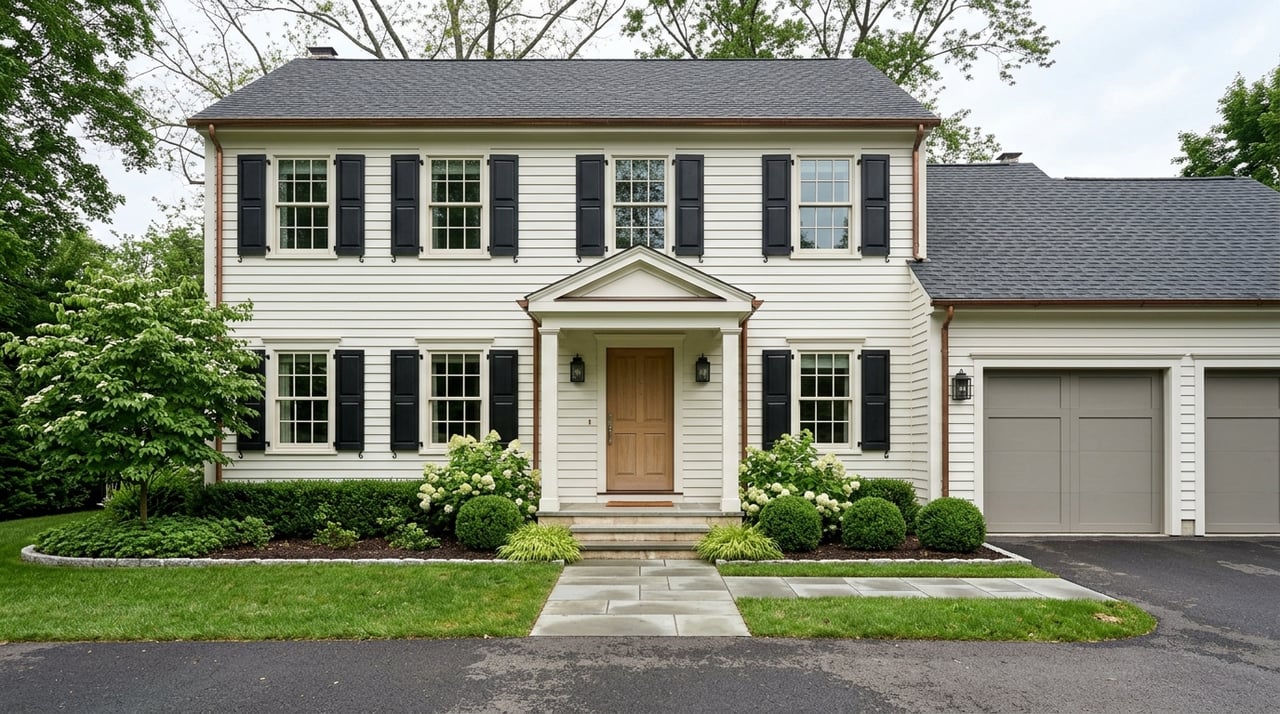
If you are thinking about buying in Harrington Park, it helps to know one thing right away: this is a town where long-term homeownership shapes the market. Inventory can be limited, detached homes are the clear norm, and the details of a property can matter just as much as the asking price. If you want to buy with confidence, you need a clear picture of housing stock, lot rules, commute patterns, and the New Jersey contract process. Let’s dive in.
Harrington Park at a glance
Harrington Park has a distinctly suburban housing profile. According to the U.S. Census Bureau, the owner-occupied housing rate is 92.3%, and the borough’s 2025 master plan reexamination reported 93.2% owner occupancy in 2022.
That kind of owner occupancy tells you a lot about the feel of the market. This is not a dense rental-heavy town with constant turnover. It is a place where many owners stay for the long term, which can make available homes feel more limited and more closely watched by buyers.
Housing stock is mostly single-family
If you are expecting a broad mix of new construction, large condo inventory, and many attached options, Harrington Park may feel more traditional than that. The borough’s 2025 master plan reexamination says that in 2022 there were 1,675 detached units out of 1,819 total housing units, or 92.1%.
In practical terms, most buyers here are searching in a market dominated by detached homes on individual lots. Some townhouse and senior housing options exist, but they are not the defining pattern of the borough.
The borough’s history also points to a major growth period between 1950 and 1970. That matters because many homes may reflect mid-century suburban design, rather than newer community planning or recent large-scale development.
What this means for home style and upkeep
Because Harrington Park is largely built out with mature housing, you should expect variation from one home to the next. Some properties may be updated and move-in ready, while others may reflect older systems, older layouts, or deferred maintenance.
This does not make one home better than another. It simply means that condition, renovation history, and inspection findings deserve close attention in your decision-making.
If you are buying with long-term plans in mind, think beyond finishes. Consider layout flow, storage, stairs, future maintenance, and whether the home fits how you want to live over the next several years.
Affordability is more than the purchase price
QuickFacts shows a median value of owner-occupied homes in Harrington Park of $776,900. It also reports median monthly owner costs with a mortgage above $4,000.
That is a useful reminder that affordability here is not only about qualifying for a loan. You also want to be comfortable with the monthly carrying costs that come with homeownership in a suburban Bergen County market.
Before you begin touring seriously, it helps to define your full comfort range. That includes down payment, closing costs, monthly payment, taxes, insurance, utilities, and near-term maintenance reserves.
Lot size and zoning matter more than many buyers expect
One of the most important things to understand before buying in Harrington Park is that lot dimensions and zoning standards can affect how you use the property later. If you are hoping to expand, add outdoor features, or rework the footprint over time, these details matter.
The borough’s residential code is strongly oriented toward one-family homes. In the R-1 district, the minimum lot area is 10,000 square feet with a minimum width of 75 feet. In R-2, the minimum lot area is 12,000 square feet with a minimum width of 100 feet. In R-3, the minimum lot area is 18,000 square feet with a minimum width of 125 feet.
Across these districts, lot coverage is capped at 25%. Typical setbacks are 35 feet in the front, 15 feet on the side, and 30 feet in the rear.
Why conforming lots deserve a closer look
Those rules help preserve the scale and spacing many buyers associate with established suburban neighborhoods. They also mean that two homes with similar square footage can offer very different future flexibility depending on the lot.
The borough’s 2025 master plan reexamination emphasizes minimum lot area, width, yard requirements, and the prohibition of flag lots as part of protecting established neighborhoods and limiting inappropriate subdivisions. It also notes a focus on controlling the size and design of new residential construction.
For you as a buyer, that creates a clear checklist. Ask whether the lot is conforming, whether any prior variances were involved, and whether your future plans would likely fit within current zoning standards.
Expansion plans should be tested early
If you are buying a home because you plan to add a bedroom, expand the kitchen, or create more outdoor living space later, do not assume the lot can support it. Yard requirements, coverage limits, and prior property changes can narrow what is possible.
This is especially important in mature towns where homes were built under older patterns and not every parcel fits today’s standards in a simple way. Early diligence can save you from buying a home that does not align with your long-term goals.
Commuting is mostly bus and car based
Harrington Park is not a rail-first commuter town. NJ Transit identifies Harrington Park park-and-ride service on Route 177 and New York service on Route 167, and the Main Line page also lists Harrington Park P/R and nearby Dumont P/R as bus access points to Port Authority.
That means your day-to-day routine may depend more on bus access, park-and-ride convenience, and driving logistics than on a local train station. If commuting is part of your weekly schedule, it is smart to factor that into your home search from the start.
The borough’s 2025 master plan says commuter parking is sufficient but likely nearing maximum capacity. Census Reporter puts the mean travel time to work at 35.6 minutes.
Daily logistics can shape the right block for you
In many towns, buyers focus first on the house and think about commute details later. In Harrington Park, the reverse can also be useful.
A home that looks perfect on paper may feel less practical if your morning routine depends on quick bus access or a smooth drive to parking. When touring, think about how the property fits your actual weekday rhythm, not just your wish list.
The borough’s earlier master plan also noted no progress on reinstating passenger rail service along the line through town. So if local train access is a major priority, you should plan based on current bus and driving options, not future rail assumptions.
The market may reward preparation
Recent market snapshots suggest buyers should be organized before they get serious. Realtor.com’s June 2026 summary showed 8 active for-sale listings in Harrington Park and said homes sold for approximately asking price on average, while Redfin reported a 106.4% sale-to-list ratio and that 78% of homes sold above list price over the last 12 months.
The exact pace of the market can change, but the larger point is clear. In a small, owner-occupied town with limited listings, strong homes may attract fast attention.
That does not mean you should rush. It does mean you should be ready to act with clarity when the right property appears.
What to have ready before making offers
A calm, prepared buyer is in a stronger position than a reactive one. Before you start writing offers, it helps to have the following lined up:
- Mortgage pre-approval
- Proof of funds for down payment and closing costs
- A New Jersey real estate attorney
- A short list of inspectors you may want to use
- A realistic understanding of your monthly ownership budget
This kind of preparation supports better decisions under pressure. It also helps you move quickly without losing sight of your own guardrails.
New Jersey attorney review moves fast
In New Jersey, the contract stage has its own rhythm, and that is important to understand before you buy in Harrington Park. The state’s consumer guide says an offer to purchase is not legally binding until it becomes part of the contract of sale.
The same guide explains that broker-prepared residential contracts include a three-business-day attorney-review clause. During that period, an attorney can propose revisions or render the contract void.
For buyers, that means the legal phase starts moving quickly once a contract is signed. Having an attorney selected before you make an offer can help reduce stress and avoid delay.
Inspections matter in a mature housing market
New Jersey’s buying guide recommends a qualified independent home inspection soon after the contract becomes binding. Depending on the property, the guide notes that termite or pest inspection, land survey, flood search, radon testing, smoke-detector certification, and other follow-up items may also be needed.
That guidance is especially relevant in Harrington Park because the housing stock is mature. Older homes can come with more layered inspection questions, even when they present beautifully.
If a home was built before 1978, New Jersey also notes that lead-based paint disclosure is required. This is another reason to review property history and disclosure materials carefully.
Flood-related diligence may apply to some properties
The borough’s zoning map includes a flood plain zone. That does not mean every home has flood-related concerns, but it does mean you should confirm whether the specific property you are considering is affected.
For certain parcels, flood and moisture-related diligence may be especially important. If a property is in or near an area of concern, make sure that question is addressed early, not after you are emotionally committed.
School structure is part of long-term planning
For buyers planning several years ahead, school assignment can be part of the ownership decision. The borough school district serves pre-K through 8, and the Northern Valley Regional High School District includes Harrington Park as one of seven sending towns.
Even if school use is not part of your immediate plans, understanding how a town is structured can still be useful. It is one more piece of context that helps you evaluate long-term fit and future resale appeal.
Buying in Harrington Park with a clear strategy
Harrington Park can be a compelling choice if you want a suburban Bergen County setting shaped by long-term ownership, detached homes, and established neighborhood patterns. But buying well here usually means looking past surface appeal and paying close attention to lot standards, commute logistics, contract timing, and property condition.
The right approach is not to move faster than everyone else. It is to be more prepared, more informed, and more precise about what works for you now and later.
If you want a discreet, well-managed buying process in Bergen County, Rebecca Day offers strategic guidance, calm coordination, and private consultation from the first search through closing.
FAQs
What kind of homes are most common in Harrington Park?
- Harrington Park is primarily a detached single-family home market, with the borough reporting 1,675 detached units out of 1,819 total housing units in 2022.
What should buyers know about zoning in Harrington Park?
- Buyers should review lot size, width, setbacks, and lot coverage rules because these standards can affect future additions, outdoor improvements, and overall expansion potential.
What is the commute setup in Harrington Park?
- Harrington Park currently functions more as a bus and car commuter town, with NJ Transit park-and-ride and bus access points, rather than a local passenger rail option.
What is attorney review in a New Jersey home purchase?
- In New Jersey, broker-prepared residential contracts include a three-business-day attorney-review period during which an attorney can suggest changes or cancel the contract.
What inspections should buyers consider in Harrington Park?
- Buyers should plan for a home inspection and may also need follow-up items such as pest inspection, survey, flood search, radon testing, or other property-specific diligence.
Why do flood questions matter for some Harrington Park homes?
- The borough’s zoning map includes a flood plain zone, so some properties may require closer review of flood-related and moisture-related considerations during due diligence.