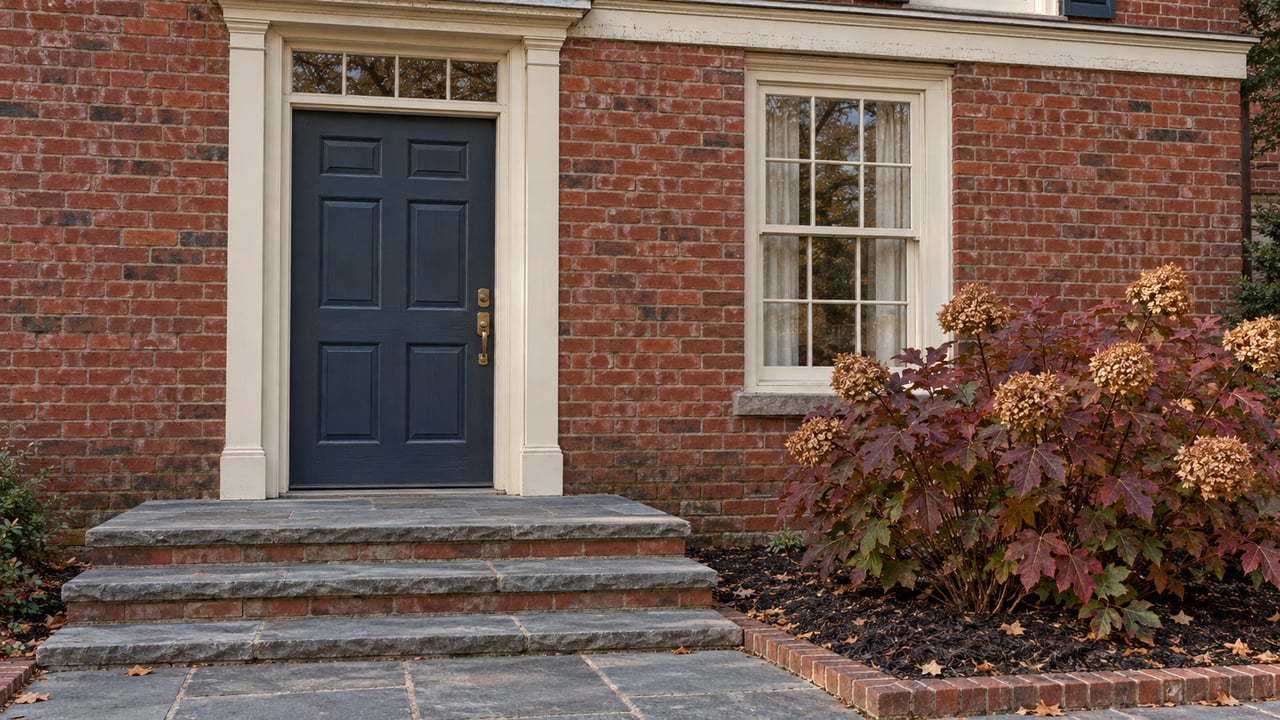
Walk into the basement of a Harrington Park Colonial built before 1980 and you will sometimes find two thin copper lines running along the floor joists toward an exterior wall. They lead nowhere useful anymore. The furnace they once fed oil to has probably been replaced with gas. But the lines themselves are a record, and in this borough that record shows up often enough to matter.
Harrington Park's housing stock was developed mostly between 1960 and 1990, a run of Colonials, split-levels, and ranches on quarter- to half-acre lots. Many of these homes went up before natural gas lines reached this part of the Northern Valley, which meant oil heat was the default. Decades later, a meaningful share of that infrastructure is still in the ground or bolted to a basement wall, and the assumption that a clean home inspection means a clean closing is the mistake that catches people here.
A Home Inspection Doesn't Rule This Out
Standard home inspections look at what's visible and functioning today: the roof, the HVAC, the electrical panel. They are not designed to locate a decommissioned underground tank that was capped and buried thirty years ago, nor to determine whether an aboveground tank still sitting in a basement corner has ever leaked. That work falls to a separate specialty, the oil tank sweep, which uses magnetic locators and sometimes ground-penetrating radar to find what a standard walkthrough would miss.
This distinction matters because it changes who bears the risk if nobody asks the extra question. A buyer who assumes the general inspection covered everything, and a seller who genuinely doesn't know what a prior owner buried in 1974, are both operating on the same blind spot. New Jersey's law does not treat that blind spot kindly.
Liability Doesn't Ask Who Used the Tank
Under New Jersey's Spill Compensation and Control Act, responsibility for a discharge of a hazardous substance, and heating oil counts, is joint and several. That means the state doesn't need to prove which owner caused a leak before assigning cleanup costs to whoever holds the property when the leak is discovered. The law does allow a current owner to argue the contamination predates their ownership, but that defense has limits, and one of them is worth sitting with.
An appellate case involving a New Jersey buyer illustrates the boundary, as LSAC Law explains. The buyer had seen vent pipes sticking out of the ground before closing, chose not to get a home inspection, and later argued he shouldn't be liable for contamination a prior owner caused. The court disagreed, finding he knew or should have known about the risk given what was visible on the property, and rejected the idea that skipping due diligence should protect him. Willful ignorance isn't a defense. If evidence of a tank was visible and nobody looked into it, the buyer inherits the exposure along with the deed.
That's the piece that changes how a Harrington Park purchase should be approached. It's not about whether the seller disclosed everything they knew. It's about whether the buyer did the work to find out what was actually there, because the law will ask that question regardless of what either party believed at closing.
The Clock Starts the Moment You Know
According to Oil Tank Removal NJ, if a sweep or inspection turns up a confirmed discharge, New Jersey requires it be reported to the NJDEP hotline within 24 hours of discovery. This isn't a suggestion buried in fine print.
Once reported, the state applies a specific benchmark to decide whether remediation is legally required: a residential soil threshold of 5,300 milligrams per kilogram of extractable petroleum hydrocarbons. Below that line, a contained, minor discharge may not trigger a full cleanup order. Above it, the property enters New Jersey's formal remediation tracking system, complete with a licensed subsurface evaluator overseeing the case from investigation through closure.
A few visible signs are worth knowing before a sweep is even scheduled, since they're the same details that mattered in the case above:
- Copper lines entering a basement wall near where a furnace used to sit
- A capped pipe or valve protruding slightly from the lawn, often near a foundation wall
- A patch of driveway, patio, or concrete that looks newer or slightly different in color than the surrounding surface
- Old fuel delivery stickers or documentation in a seller's disclosure packet referencing "oil" as a prior heat source
None of these confirm a tank is present. All of them are reason enough to ask.
Sweep, Remove, or Abandon: What Each Path Actually Resolves
Once a tank is confirmed, New Jersey gives property owners three practical paths, and they are not interchangeable.
| Option | Typical Cost | What It Resolves |
|---|---|---|
| Tank sweep (locate only) | $200 to $350 for a standard lot | Confirms presence and rough location, doesn't test for leaks |
| Full removal | Varies by tank size and site access | Eliminates the tank and the future liability tied to it |
| Documented abandonment in place | Lower upfront cost than removal | According to All American Enviro, this is legal only if the tank is emptied, cleaned, filled with sand or foam, and filed with the municipality; without soil testing, the ground itself remains unverified |
Removal is the option most real estate professionals and buyers prefer, because it's the only one of the three that fully closes the liability question rather than managing around it. Abandonment is legal under the right conditions, but it requires paperwork most sellers don't realize they need, and it leaves a buyer inheriting a tank that technically still exists on the property, just inert.
The financial stakes explain why people take this seriously. A tank that has sat in the ground for more than 15 years has close to a fifty percent chance of leaking, and once contamination is confirmed, average remediation costs run $6,000 to $12,000, with cases involving groundwater or structural contamination climbing well past $100,000. A $250 sweep looks inexpensive next to that range for a reason.
Insurance and Lenders Feel It Before Anyone Else Does
New Jersey's Department of Banking and Insurance has been direct about this: many insurers maintain underwriting guidelines that prohibit writing a policy on a home with an oil tank on the premises, and some base that decision specifically on the tank's age. A buyer who assumes financing and insurance will simply fall into place after a clean inspection can find out at the worst possible moment that an unaddressed tank is the reason a lender or carrier won't move forward.
For homeowners facing remediation costs, the state does offer some relief through its UST Fund, which provides financial assistance to eligible property owners. It doesn't erase the disclosure obligation or the reporting timeline, but it's worth knowing the option exists before assuming a discovery is a worst-case scenario.
What This Means If You're Selling
The sellers who avoid a stalled closing are the ones who resolve the tank question before the home ever gets listed, not after an attorney review raises it. That generally means:
- Schedule a sweep early, even if the home has used gas heat for years, since a converted system doesn't guarantee the old tank was ever removed.
- If a tank is confirmed, decide between removal and documented abandonment before listing, since buyers increasingly ask this question directly.
- Keep every piece of documentation, permits, soil test results, municipal filings, in one file for the closing attorney.
- Disclose the tank's history regardless of current use. New Jersey requires this even for tanks no longer in service.
What This Means If You're Buying
A seller's disclosure form is a starting point, not a guarantee. Property records and disclosures are sometimes incomplete or simply wrong about what a prior owner did decades ago. If a home was built in Harrington Park's primary construction era and shows any of the signs above, request a sweep as a condition of the contract, not an afterthought. It's a small cost relative to what's actually at stake, and it's the only way to know what you're inheriting before you inherit it.
Frequently Asked Questions
Does converting from oil to gas heat mean the old tank was removed? Not necessarily. Many homes switched heating systems without ever removing or properly abandoning the original tank. A sweep is the only way to confirm what happened to it.
If the seller never used the tank, are they still required to disclose it? Yes. New Jersey requires disclosure of a tank's presence even if it's no longer in use.
Can a buyer back out if a tank sweep finds a leak during due diligence? That depends on the specific contract terms negotiated, which is exactly why a sweep should happen early enough to leave room for renegotiation rather than after attorney review has closed.
Is an aboveground tank in a basement less of a concern than a buried one? It's easier to inspect visually, but age still matters. Aboveground tanks in Harrington Park basements are often 30 to 40 years old, which puts many of them near or past their expected service life regardless of location.
A transaction involving a home this old deserves someone who treats the tank question as part of the strategy from day one, not a surprise to manage under deadline pressure. If you're preparing to buy or sell in Harrington Park and want a plan that accounts for exactly this kind of local detail, Rebecca Day offers a private consultation built around protecting your timeline and your outcome.
This article is general information, not legal, tax or financial advice. Consult a qualified professional about your situation.